

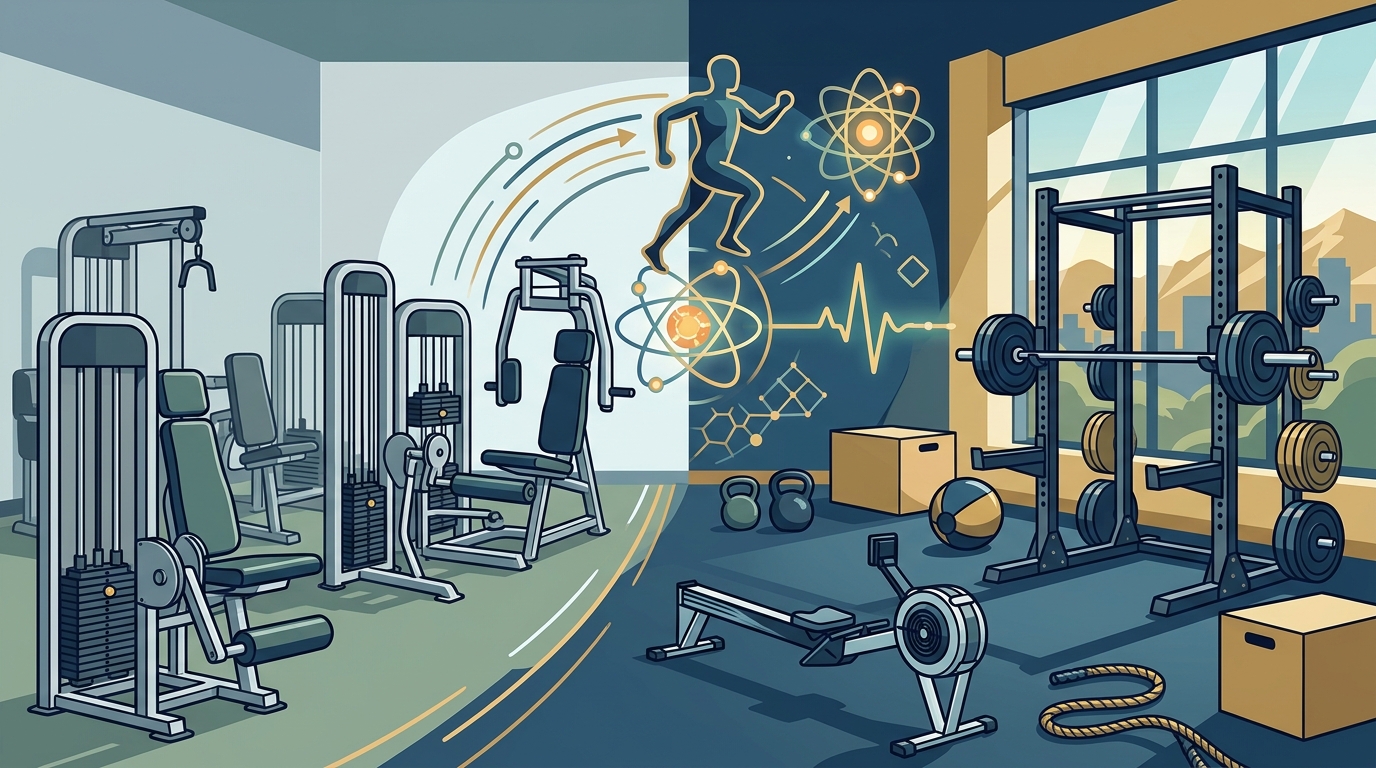
Walk into most commercial gyms and you will find rows of machines that isolate a single muscle at a time. Functional fitness takes a fundamentally different approach—one that trains your body to move the way it was designed to move while simultaneously building the strength and metabolic resilience you need for decades of active living. At Colfax Strong Strength & Conditioning in Denver, every class, personal training session, and semi-private workout is built around this philosophy.
What Is Functional Fitness—and Why Does It Matter?
Functional fitness is a style of training that mirrors the movement patterns common in day-to-day life. Instead of isolating one muscle, these patterns train multiple groups to work together efficiently, supporting overall athletic development and everyday capability. Whether you are hauling luggage through DIA or chasing your kids around Washington Park, functional fitness builds the foundation you rely on.
The approach originated in clinical rehabilitation. Physical therapists developed multi-joint exercises to help injured patients regain real-world movement capacity. Over time, the methodology was adopted by military programs and elite athletes before becoming a mainstream training philosophy embraced by gyms like Colfax Strong.
At its core, functional fitness develops multiple capacities at once—strength, mobility, stability, agility, and coordination—through compound movements that challenge your body as a unified system rather than a collection of isolated parts.
The Science Behind Strength Training and Metabolic Health
Total body wellness extends well beyond aesthetics. Metabolic health—your body's ability to regulate blood sugar, maintain healthy blood pressure, and manage body composition—is one of the strongest predictors of long-term vitality. Strength training is one of the most effective interventions for improving every marker on that list.
Muscle as a Metabolic Engine
Your muscles are metabolically active tissues that require energy even at rest. The more lean muscle mass you carry, the higher your resting metabolic rate becomes, leading to increased calorie burning throughout the day. This is one reason strength-focused functional fitness produces lasting body composition changes rather than the temporary results associated with crash diets or cardio-only approaches.
Muscle tissue also acts as a metabolic sink for glucose. When you eat carbohydrates, your body converts them to glucose that enters the bloodstream. Muscles absorb this glucose and store it as glycogen for future energy needs—so more muscle means greater glucose storage capacity and more stable blood sugar levels.
Insulin Sensitivity and Blood Pressure
Resistance training provides significant benefits for blood sugar balance, primarily by improving insulin sensitivity. Research also shows that strength training may help lower systolic and diastolic blood pressure by improving blood flow and supporting the structure and function of blood vessels. One study found that ten weeks of combined strength and aerobic exercise led to positive blood pressure changes for people who trained two to three sessions per week.
Combating Age-Related Decline
Beginning around age 30, adults naturally start losing muscle mass in a process known as sarcopenia. Without regular resistance training, this gradual decline accelerates with age, affecting strength, balance, and mobility. Research shows that just two weekly resistance workouts can help maintain or even reverse sarcopenia, making functional fitness an investment that pays dividends for decades.
Three Training Formats, One Functional Fitness Philosophy
At Colfax Strong, every program shares the same foundational commitment to functional movement, total body wellness, and building strength alongside metabolic health. The difference lies in how the coaching is delivered.
Group Fitness Classes
Colfax Strong offers group fitness classes in Denver tailored to all experience levels. Classes are designed to challenge you while fostering a welcoming and inclusive environment. Group sessions feature constantly varied workouts that include Olympic and power lifting barbell movements, gymnastics, running, biking, rowing, kettlebells, dumbbells, and more. The variety keeps workouts engaging and ensures well-rounded development across all fitness domains.
The community element is not just a bonus—it is a performance multiplier. When you train alongside people who celebrate your wins, consistency improves and motivation becomes self-sustaining.
Personal Training
One-on-one personal training provides the highest level of individualization. You work directly with an expert coach to create a customized plan, track your progress, and stay accountable. A qualified coach watches how you move, spots compensations you cannot see yourself, and makes corrections before small issues turn into bigger problems. For people with specific health goals, injury histories, or competitive aspirations, personal training offers the most direct path to results.
Semi-Private Training
Semi-private training gives each participant a custom workout plan tailored to their goals while sharing coach attention in a small group. This format is often ideal for beginners because coaches provide individualized instruction on proper form while designing programming appropriate for your starting fitness level. It combines the accountability of personal training with the energy and affordability of a group setting.
In semi-private sessions at Colfax Strong, coaches blend conditioning intervals with strength work to build durability without overtraining—a balance that is critical for sustainable metabolic health improvements.
The Six Foundational Movement Patterns
Functional fitness programming revolves around six fundamental human movements. Understanding these helps you see why every workout at Colfax Strong is built to develop practical, transferable strength.
- Squat and Hinge — These patterns support sitting, standing, lifting objects from the floor, and climbing stairs. Back squats, goblet squats, deadlifts, and kettlebell swings all train this category.
- Push — Pressing movements strengthen your upper body for opening heavy doors, moving furniture, or catching yourself during a fall. Think push-ups, overhead presses, and bench presses.
- Pull — Pulling movements counterbalance pressing work and build the back, bicep, and grip strength needed for carrying bags, rowing a kayak, or doing yard work. Pull-ups, barbell rows, and ring rows are staples.
- Lunge and Step — Single-leg movements prepare your body for stair climbing, trail running, and stride-based activities. They also expose and correct left-right imbalances that can lead to injury.
- Rotate and Anti-Rotate — Core stability work that builds your ability to twist, turn, or brace under pressure. Russian twists, Pallof presses, and woodchops develop rotational control.
- Carry — Loaded carries like farmer walks build total body tension, grip endurance, and postural stability in a way that directly transfers to everyday tasks like hauling groceries or carrying a child.
Every group class, personal training session, and semi-private workout at Colfax Strong touches multiple patterns in a single session, ensuring balanced development across your entire body.
Who Benefits Most From Functional Fitness?
The beauty of functional fitness is its versatility. It is suitable for people of all ages and fitness levels. However, several groups find it especially transformative:
- Desk Workers — Sitting for long hours leads to poor posture and limited mobility. Functional fitness emphasizes core strength, flexibility, and joint stability to counteract these effects.
- Parents and Caregivers — The strength and endurance needed for physically demanding tasks like carrying children or managing household work translates directly from functional training.
- Adults Over 40 — Colfax Strong provides programs tailored to all age groups, including those in later stages of life. Coaches are experienced in helping older adults improve mobility, strength, and overall fitness in a supportive and safe environment. The metabolic and bone-density benefits of resistance training become increasingly important with each passing decade.
- Competitive Athletes — Whether preparing for a HYROX race, a local 5K, or a ski season in the Rockies, functional fitness builds a well-rounded athletic base. Colfax Strong builds strength, endurance, agility, power, and flexibility, providing a comprehensive foundation for any sport.
- Complete Beginners — Quality programs are designed to be scalable, meaning coaches modify exercises to match your current abilities and progress you safely over time. Everyone starts somewhere.
Practical Steps to Improve Metabolic Health Through Functional Fitness
Knowing the science is one thing. Putting it into action is another. Here is a realistic framework drawn from current research and coaching experience at Colfax Strong.
1. Commit to Two or Three Sessions Per Week
For general metabolic health benefits, two to three resistance training sessions per week, each lasting at least 20 minutes, appears to be the baseline for meaningful improvement. Three focused sessions per week often outperform five rushed ones, so consistency trumps volume every time.
2. Prioritize Compound Movements
Multi-joint exercises like squats, deadlifts, presses, and rows recruit large muscle groups simultaneously. This recruits high-threshold muscle fibers and has the biggest impact on your metabolic rate. You burn more calories during the session and keep your metabolism elevated afterward.
3. Incorporate Conditioning Work
The ideal approach combines both strength and cardiovascular training. Strength training builds the foundation of metabolic health while aerobic exercise supports cardiovascular function and increases weekly calorie expenditure. Circuit-style conditioning—moving from squats to push-ups to rows with short rest—maintains an elevated heart rate while building strength.
4. Pair Training With Nutrition Coaching
At Colfax Strong, nutrition coaching provides personalized guidance to help you create sustainable eating habits that align with your fitness goals. It is designed to improve performance, recovery, and overall health. No training program can outwork a poor diet, and metabolic health responds powerfully to the combination of intelligent training and smart nutrition.
5. Track Progress and Adjust
Every membership at Colfax Strong includes regular InBody scans and personalized goal reviews every 90 days. Most plans benefit from review and adjustment every four to eight weeks. Objective data removes guesswork and keeps your programming aligned with your evolving fitness level.
Training at Altitude: A Denver-Specific Advantage
Living and training at Denver's 5,280-foot elevation increases demand on your cardiovascular and respiratory systems. Early workouts may feel harder due to reduced oxygen pressure, but over time this becomes an advantage. Combining strength and conditioning at altitude prepares athletes for skiing, hiking, running, and other Colorado pursuits while building cardiovascular resilience that translates to performance at any elevation.
Colfax Strong's 9,000 square foot facility in downtown Denver—just minutes from Civic Center Park—was built specifically for this kind of comprehensive training, with premium Rogue equipment, dedicated open gym areas, and expert coaching tailored to all fitness levels.
Key Takeaways
- Functional fitness trains your body as an integrated system using compound, multi-joint movements that mirror daily life.
- Strength training directly improves metabolic health by increasing insulin sensitivity, stabilizing blood sugar, lowering blood pressure, and raising resting metabolic rate.
- Two to three sessions per week is enough to produce meaningful metabolic and strength improvements.
- Group classes, personal training, and semi-private training all deliver functional fitness—the right format depends on your goals, budget, and preferences.
- Scalable programming makes functional fitness accessible to complete beginners and experienced athletes alike.
- Pairing training with nutrition coaching and regular progress tracking accelerates results.
How to Get Started at Colfax Strong
Taking the first step is often the hardest part. During a free welcome meeting at Colfax Strong, you will discuss your background, what you are hoping to achieve, and which program format makes the most sense—group classes, personal training, or semi-private sessions. There is no commitment required, just a conversation with a coach who genuinely wants to help.
With membership options starting as low as $50 per week, Colfax Strong provides a fitness solution for every budget. Whether you are brand new to fitness or returning after time away, the coaching team combines extensive expertise with a passion for helping members succeed.
Frequently Asked Questions
- What makes functional fitness different from traditional weight training?
- Traditional strength training primarily aims to build overall muscle size and strength using isolated exercises. Functional fitness focuses on improving the body's ability to perform daily tasks by training six foundational movement patterns—push, pull, squat, lunge, hinge, and core—using compound exercises that engage multiple muscle groups simultaneously.
- Do I need to be fit before starting functional fitness classes?
- Not at all. Colfax Strong welcomes members of all fitness levels, from complete beginners to seasoned athletes. Coaches modify every exercise to match your current abilities and progress you safely over time.
- How does strength training improve metabolic health?
- Strength training improves metabolic health through several mechanisms: it increases lean muscle mass which raises your resting metabolic rate, improves insulin sensitivity for better blood sugar regulation, helps lower blood pressure, and reduces body fat. Research indicates that two to three sessions per week is sufficient for meaningful metabolic improvement.
- What is semi-private training and who is it best for?
- Semi-private training provides each participant with a custom workout plan tailored to their individual goals while sharing a coach in a small group setting. It is often ideal for beginners who want individualized attention on form and programming without the full cost of one-on-one personal training.
- How quickly will I see results?
- Most people notice improvements in energy, strength, and movement quality within a few weeks. Visible body composition changes typically become apparent after several months of consistent training paired with proper nutrition.
- Can older adults do functional fitness safely?
- Yes. Colfax Strong provides programs tailored to all age groups, including older adults. Coaches are experienced in helping improve mobility, strength, and overall fitness in a supportive environment. Resistance training is the first-line treatment for age-related muscle loss and is especially important for maintaining independence.